Room Air Purifiers: Size, Filter Costs, and Placement Before Features
Choose a unit you can run consistently and maintain, without promising medical outcomes.
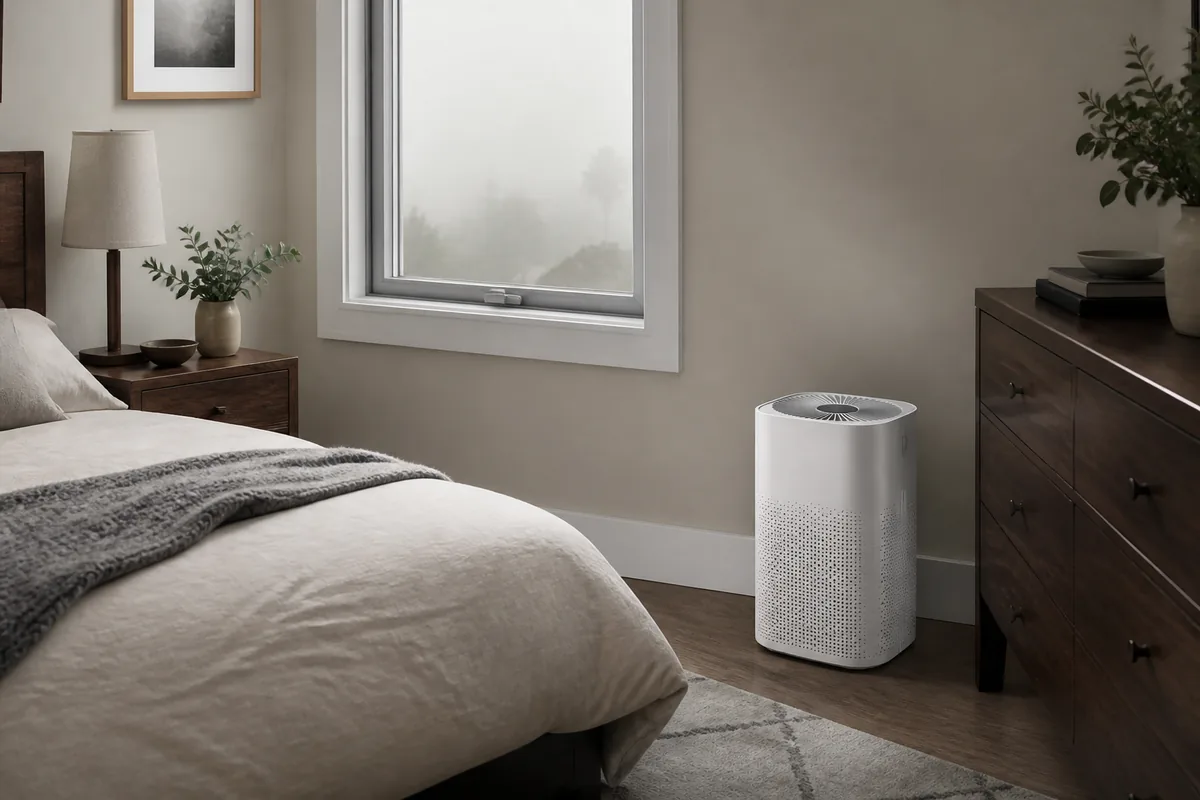
A purifier is tucked tightly between a dresser and curtain because that is where the outlet sits. It runs quietly, but restricted airflow and an overdue filter reduce the value of the purchase.
Size the purifier using its published room and airflow information, place it with required clearances, and calculate replacement-filter cost before buying. It complements ventilation and source control.
Measure the Room You Actually Use
Record room dimensions, door-open habits, outlet location, sleep distance, and the clear space required around air inlets and outlets.
What Matters Before You Compare Products
- Published performance information for the intended room
- Replacement filters available at a sustainable cost
- Noise and controls acceptable at the speed you will use
A useful shortlist should solve a specific routine rather than chase the longest feature list. The three formats below cover different household patterns; none is automatically best for everyone.
Three Smart Ways to Shop This Category
Compact bedroom purifier
A smaller unit can be placed nearby and run consistently.
Tradeoff: It may not serve an open hallway or adjacent rooms.
Browse current optionsLarge-room purifier
Higher airflow can cycle a larger connected space more effectively.
Tradeoff: The unit, filter, and sound footprint are larger.
Browse current optionsSimple purifier without app controls
Physical controls reduce setup and account dependence.
Tradeoff: It offers fewer schedules and remote settings.
Browse current optionsA Practical Plan Before Checkout
- Read official room-sizing conditions, not only the headline area.
- Price a year of replacement filters.
- Place the unit according to clearance and safety instructions.
Common Buying Mistakes
- Blocking the intake with furniture or curtains
- Buying by room-size headline without reading conditions
- Making medical claims or replacing prescribed care with an appliance
The PickAbode Verdict
A properly sized simple purifier with affordable filters is usually a better buy than a feature-heavy unit that will run on an unusably noisy setting.
Before purchasing, confirm current dimensions, materials, care instructions, delivery terms, returns, warranty, and availability on the retailer or manufacturer page. Product listings and inventory can change after this guide is updated.
Frequently Asked Questions
Will one purifier clean a whole home?
Closed doors, layout, airflow, and device capacity make room-by-room performance very different.
How often should filters be replaced?
Follow the manufacturer's guidance and inspect conditions; smoke, dust, and runtime can change intervals.
Does it replace ventilation?
No. Filtration, ventilation, and pollution-source control serve different roles.