Mattress Toppers for Hot Sleepers: Materials and Tradeoffs Explained
Comfort and temperature are linked, but a topper cannot fix every mattress problem.
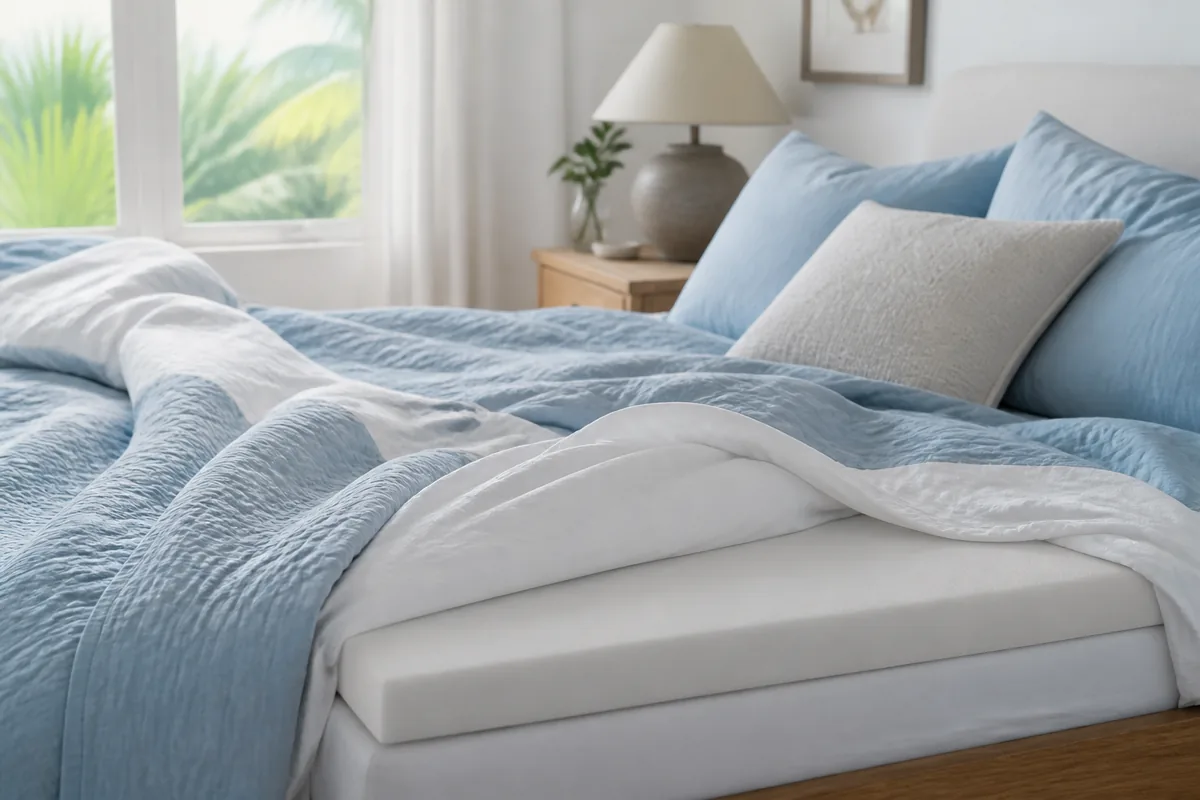
The bedroom feels comfortable at bedtime, yet the sleeper wakes warm at 3 a.m. A plush topper may soften pressure points, but a dense material plus waterproof layers can trap more warmth than expected.
Choose the thinnest topper that solves the comfort issue, pair it with breathable bedding, and remember that airflow around the bed and room temperature influence the result.
Measure the Room You Actually Use
Confirm mattress dimensions and fitted-sheet pocket depth after adding the topper. A loose sheet can bunch and change how the surface feels.
What Matters Before You Compare Products
- The comfort problem: firmness, pressure, or surface texture
- Material resilience and expected body impression
- Cover removal and care instructions
A useful shortlist should solve a specific routine rather than chase the longest feature list. The three formats below cover different household patterns; none is automatically best for everyone.
Three Smart Ways to Shop This Category
Perforated latex topper
Latex tends to feel buoyant rather than deeply enveloping.
Tradeoff: It is heavier, often pricier, and may have a noticeable initial odor.
Browse current optionsThin fiber-filled topper
It adds a washable-feeling comfort layer without a deep cradle.
Tradeoff: Fill can compress and needs regular refluffing.
Browse current optionsOpen-cell foam topper
It contours more closely around shoulders and hips.
Tradeoff: Some sleepers still find close contouring warm.
Browse current optionsA Practical Plan Before Checkout
- Identify whether heat or firmness is the primary problem.
- Check the return policy because feel is personal.
- Let any new topper air out according to its instructions.
Common Buying Mistakes
- Adding a topper to a deeply sagging mattress
- Stacking several protective layers without considering breathability
- Treating cooling labels as a guarantee for every sleeper
The PickAbode Verdict
A thin, responsive topper is the safer starting point for hot sleepers. Choose deeper foam only when pressure relief is the larger problem and the retailer offers a practical return path.
Before purchasing, confirm current dimensions, materials, care instructions, delivery terms, returns, warranty, and availability on the retailer or manufacturer page. Product listings and inventory can change after this guide is updated.
Frequently Asked Questions
Can a topper fix a sagging mattress?
No. It may soften the surface but usually follows the sag underneath.
How thick should it be?
Use enough material to address comfort without making sheet fit, edge stability, or heat buildup worse.
Do cooling covers work?
They can change the first-touch feel, but room conditions and the layers above and below remain important.