Closet Organizer Systems: Build Around Your Wardrobe, Not a Catalog Photo
Count hanging lengths, folded stacks, and daily reach before choosing fixed or adjustable parts.
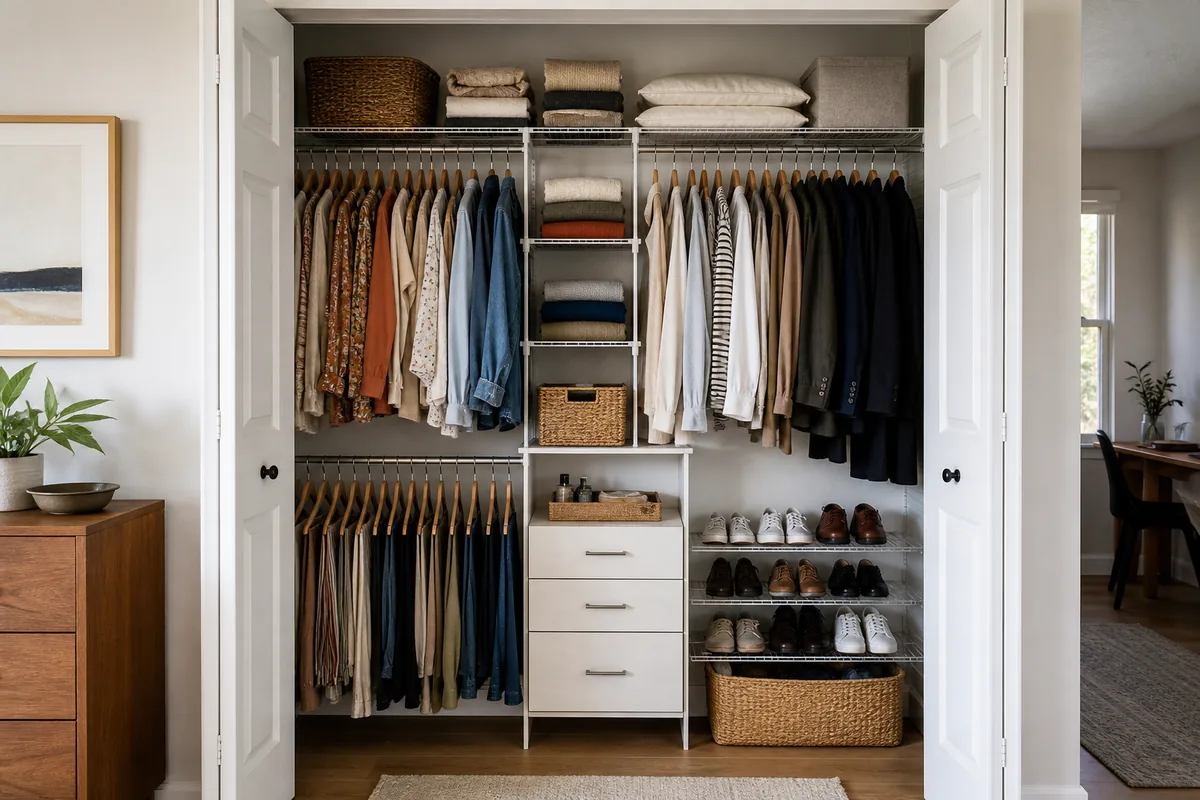
A catalog closet devotes half its space to neatly folded shirts, but the real wardrobe contains dresses, work jackets, gym clothes, and a vacuum. A beautiful system can reduce capacity if it solves the wrong categories.
Inventory garments by hanging length and folded volume. Adjustable shelves and rails cost more upfront but accommodate changes better than a tightly fixed layout.
Measure the Room You Actually Use
Measure inside width at several heights, door opening, corners, baseboards, and access to outlets or panels. Note wall construction before selecting supports.
What Matters Before You Compare Products
- Enough long-hang and short-hang space
- Adjustable components for wardrobe changes
- Drawers and baskets that clear the door opening
A useful shortlist should solve a specific routine rather than chase the longest feature list. The three formats below cover different household patterns; none is automatically best for everyone.
Three Smart Ways to Shop This Category
Wall-track adjustable system
Rails and shelves can move as categories grow or shrink.
Tradeoff: Installation depends on secure wall attachment and careful leveling.
Browse current optionsFreestanding closet tower
It adds shelves and a second rail with fewer wall modifications.
Tradeoff: Baseboard gaps and stability may reduce the usable depth.
Browse current optionsModular drawer and shelf units
Closed and open modules can be combined gradually.
Tradeoff: Too many small modules create seams and lost inches.
Browse current optionsA Practical Plan Before Checkout
- Count wardrobe categories before removing the old rod.
- Draw elevations of each wall with actual garment lengths.
- Install and anchor according to the system and wall instructions.
Common Buying Mistakes
- Replacing all long-hang space with double rails
- Installing drawers that cannot clear sliding doors
- Planning every inch with no overflow zone
The PickAbode Verdict
An adjustable wall-track system is the most adaptable permanent choice. Renters should prioritize a stable freestanding tower plus simple bins.
Before purchasing, confirm current dimensions, materials, care instructions, delivery terms, returns, warranty, and availability on the retailer or manufacturer page. Product listings and inventory can change after this guide is updated.
Frequently Asked Questions
Are drawers necessary?
Only for categories that benefit from concealment or dust protection; baskets may be easier in a narrow opening.
How much empty space should remain?
Enough for garments to move and for small seasonal changes without a complete reset.
Can I install a system myself?
That depends on the wall, tools, load, and instructions. Use professional help when secure attachment is uncertain.